Hired & Inspired
Is Your Resume
Helping You Get
Interviews - or
Holding You Back?
Get your free resume score, explore practical
career resources, and choose the level of
support that fits your next move.
Explore Career Resources
Clarity & Focus - Practical Support - Real Results.
How It Works
Choose Your Next Step
Resume
Quick Start
$49
Fast, practical resume feedback with up to 3 bullet improvements, keyword suggestions, and a short action list.
Career
Alignment Audit
$149
A deeper resume and career direction review to see whether your resume aligns with the roles you’re targeting.
Career
Reset Package
$299
Deeper resume enhancement, career positioning, job search strategy, and a final action plan for your next move.
Career Guides & Digital Downloads
Actionable guides and workbooks you can use today to move your career forward.
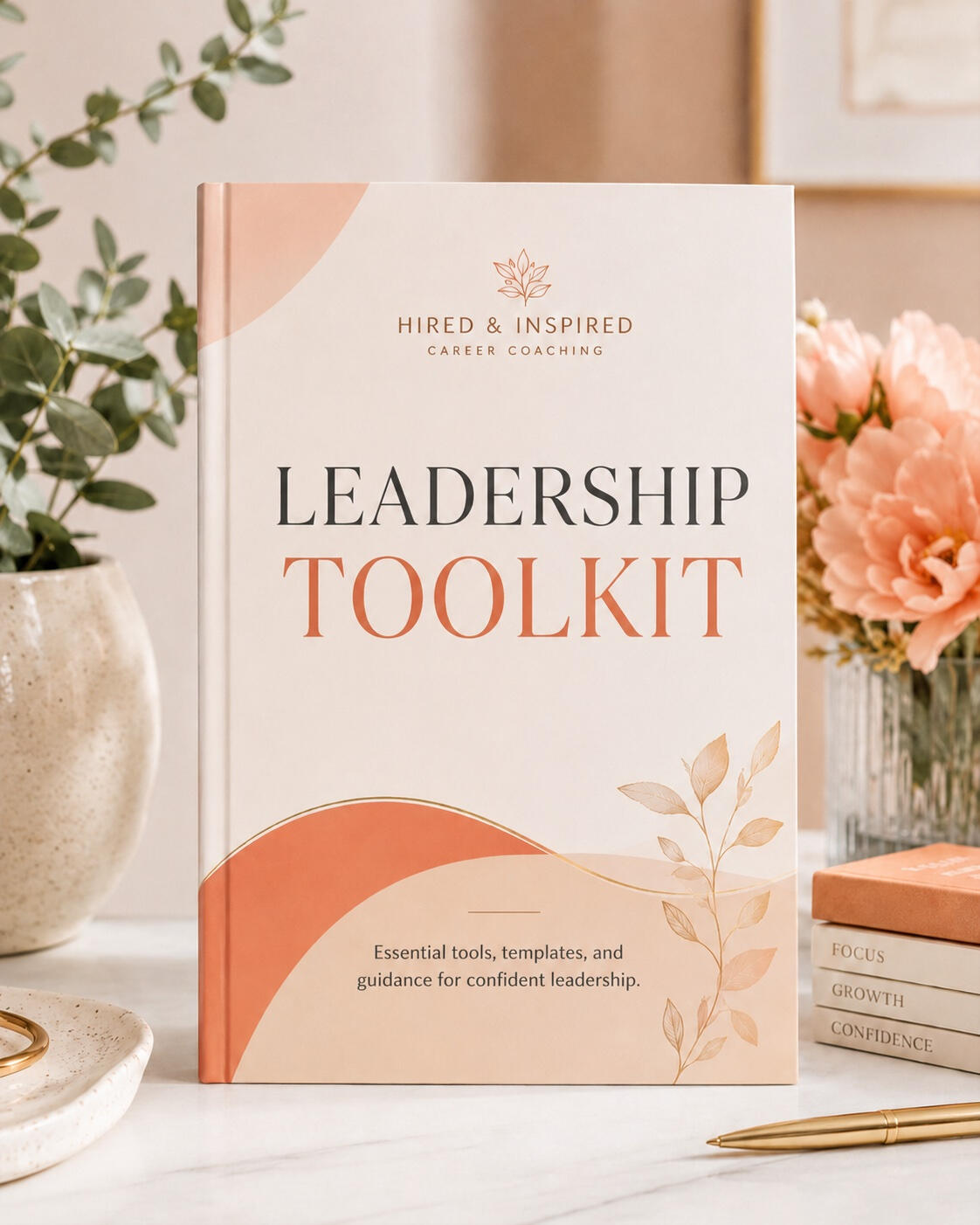
Leadership Toolkit
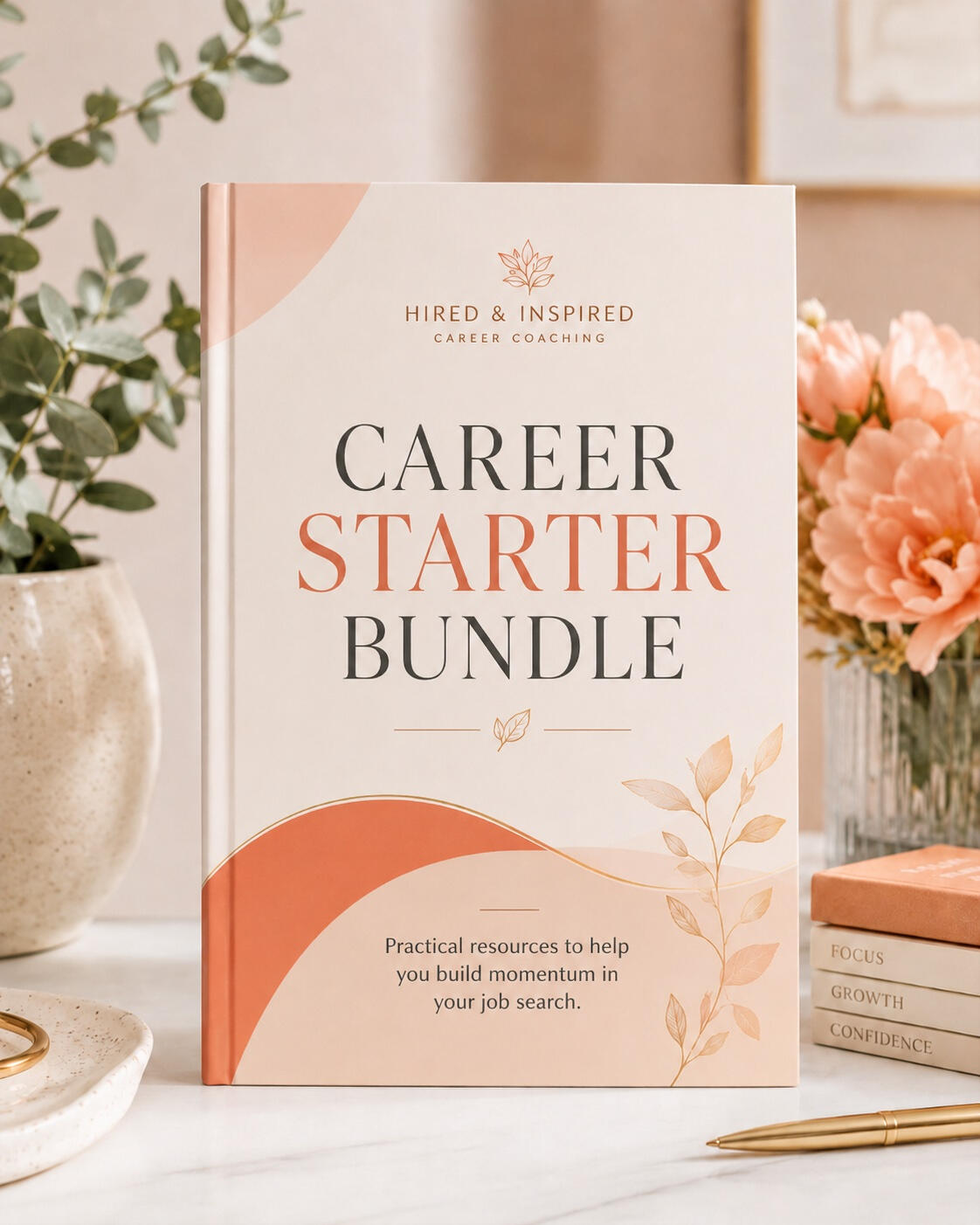
Career Starter Bundle

Leadership Essential Bundle
Free Career Resources
Helpful checklists and templates to support your job search and career growth.
Career Articles & Practical Advice

Resume Tips
Improve your resume, tailor
your experience, and stand
out to recruiters.

Interview Strategy
Prepare with confidence and
answer questions that show
your value.

Career Reinvention
Pivot with purpose and create
a plan that aligns with your
next chapter.
Recruiter-backed advice
on resumes, interviews, career
pivots, and professional growth
- real talk to help you
land your next opportunity.
Hired & Inspired
Clarity. Confidence. Your Next Chapter.
ABOUT HIRED & INSPIRED
Helping you create
clarity, confidence, and
a career you're proud of.
Hired & Inspired was created for professionals who are ready
for more - more clarity, more confidence, and a career that
truly fits the life you want to build.You don't have to figure it out alone. I'm here to help.
WHY I DO THIS WORK
With over 10 years of experience in recruiting and career services, I've seen how the right guidance can change everything. My goal is to give you the practical tools, honest feedback, and real strategies that move you forward.
Real experience in recruiting and career services.
Personalized approach for your unique journey.
Practical strategies that create real results.
Support that empowers your confidence.
You have the experience. You have the potential. Together, we'll help you get hired and inspired by what's next.
Hired & Inspired
Clarity. Confidence. Your Next Chapter.
FAQ
Frequently Asked Questions
Find answers to the most common questions about my services and resources.
1. How does the free resume score work?
You’ll answer a few quick questions and share basic information about your resume and job search. Your score is designed to give you a simple starting point so you can see whether your resume may need more clarity, stronger positioning, or better alignment with the roles you want.
2. Is the free resume score a full resume review?
No. The free resume score is a quick starting point, not a full review or rewrite. For deeper feedback, the Resume Review & Career Alignment Audit Lite gives you written notes, practical recommendations, and next steps.
3. What happens after I purchase a resume review?
After purchase, you’ll receive instructions for submitting your resume and target role information. I’ll review your materials and send back written feedback with clear recommendations.
4. Do you write the resume for me?
The Resume Review & Career Alignment Audit Lite is not a full rewrite. It gives you feedback on what is working, what may be missing, and what to improve. Full rewrite services can be offered separately if available.
5. How long does the resume review take?
The standard turnaround is typically 2–3 business days after I receive your resume and required information. However, due to the high volume of requests, the turnaround time could be 5-7 business days.
6. What is the Career Reinvention Roadmap Report?
It is an in-depth written report for people who want more than a resume review. It looks at your career direction, transferable skills, resume positioning, possible next roles, and practical next steps.
7. Do you offer live coaching calls?
Live calls are not included in the standard written services. If a report review call is available, it will be offered as an optional add-on.
8. Who are these services best for?
These services are best for professionals who want clearer resumes, stronger career positioning, more confidence in their next move, and practical guidance without vague advice or overwhelm.
9. Are the digital guides refundable?
Because digital downloads are delivered instantly, they are generally non-refundable. Please review the product description carefully before purchasing.
10. Can I use the workbook on my iPad or print it at home?
Yes. Digital workbooks are designed so you can either print them or use them on a tablet with a note-taking app.
Contact Hired & Inspired
Have a question, want to work together, or need help choosing the right service? I’d love to hear from you. Use the form below and I’ll get back to you as soon as possible.
Hired & Inspired
Clarity. Confidence. Your Next Chapter.
Career Guides &
Digital Downloads
Self-paced guides, workbooks, and bundles designed to
help you grow with confidence at every stage of your career.
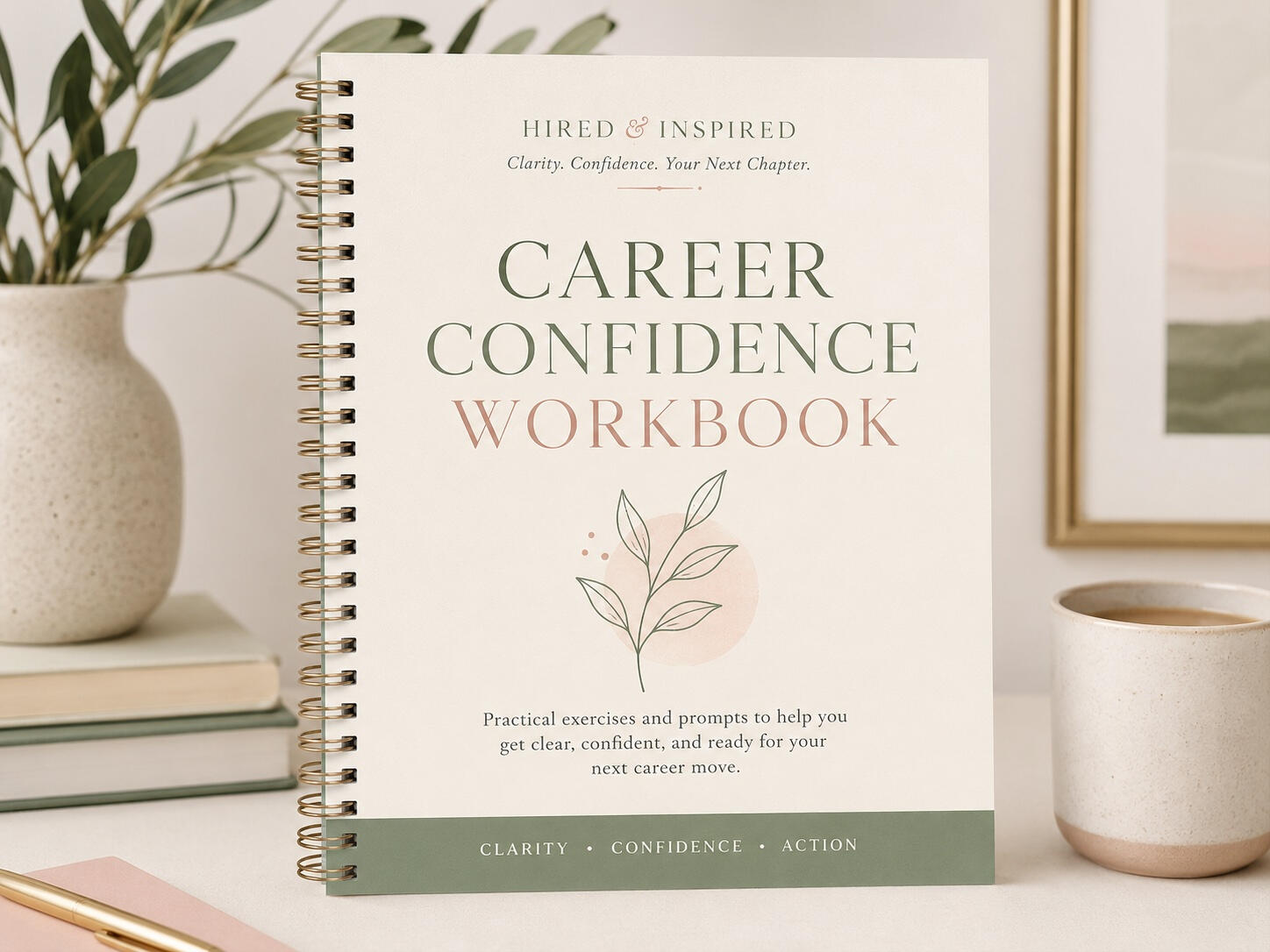
FEATURED GUIDE
Career Confidence Workbook
Build your confidence, overcome self-doubt,
and take actionable steps towards the career
you deserve.
* Build Unshakable confidence.
* Set goals and take aligned action.
* Practical exercises and refections.
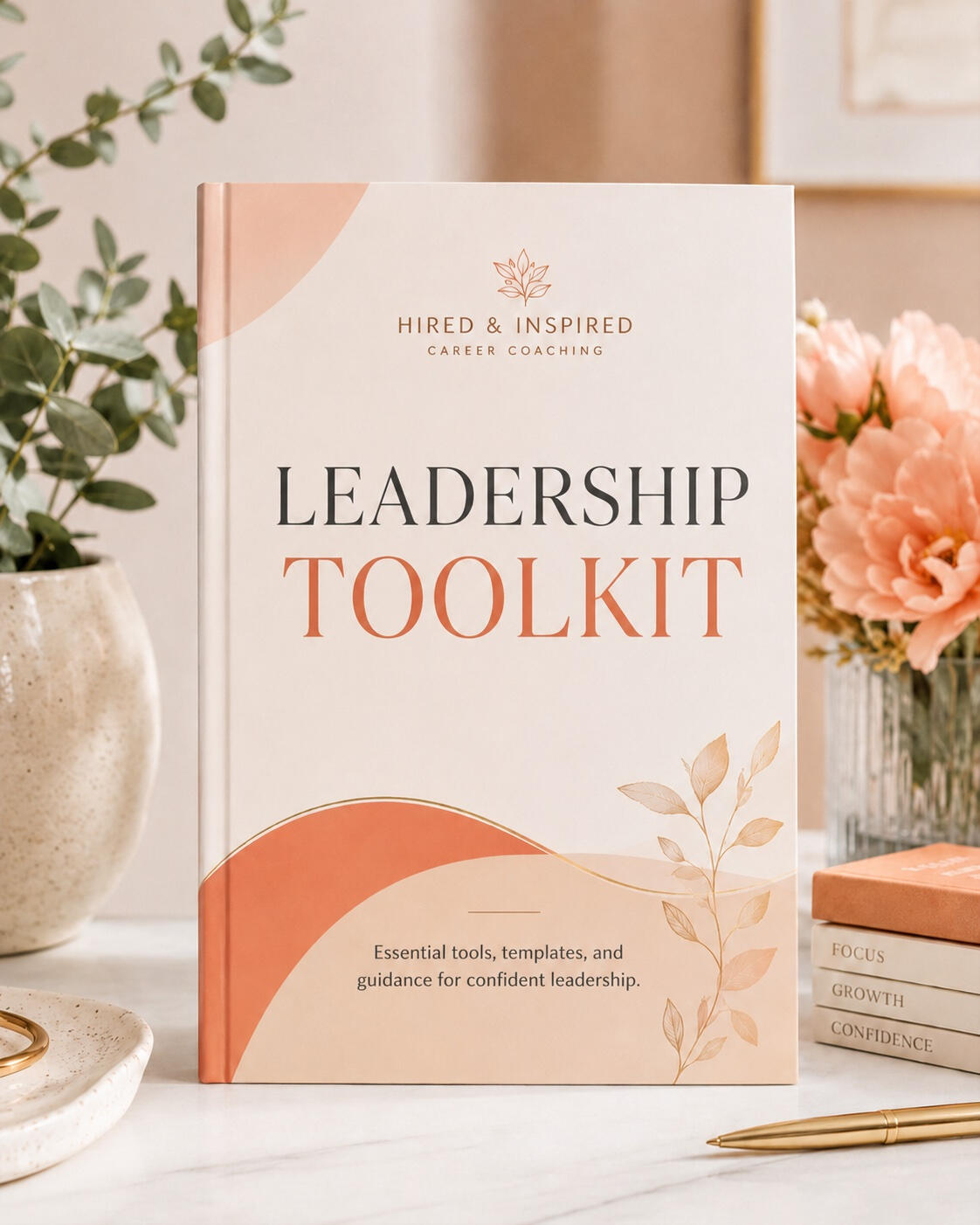
LEADERSHIP
TOOLKIT
Practical tools to lead
with clarity, influence,
and impact.
* Leadership frameworks.
* Team communication.
* Decision-making guides.
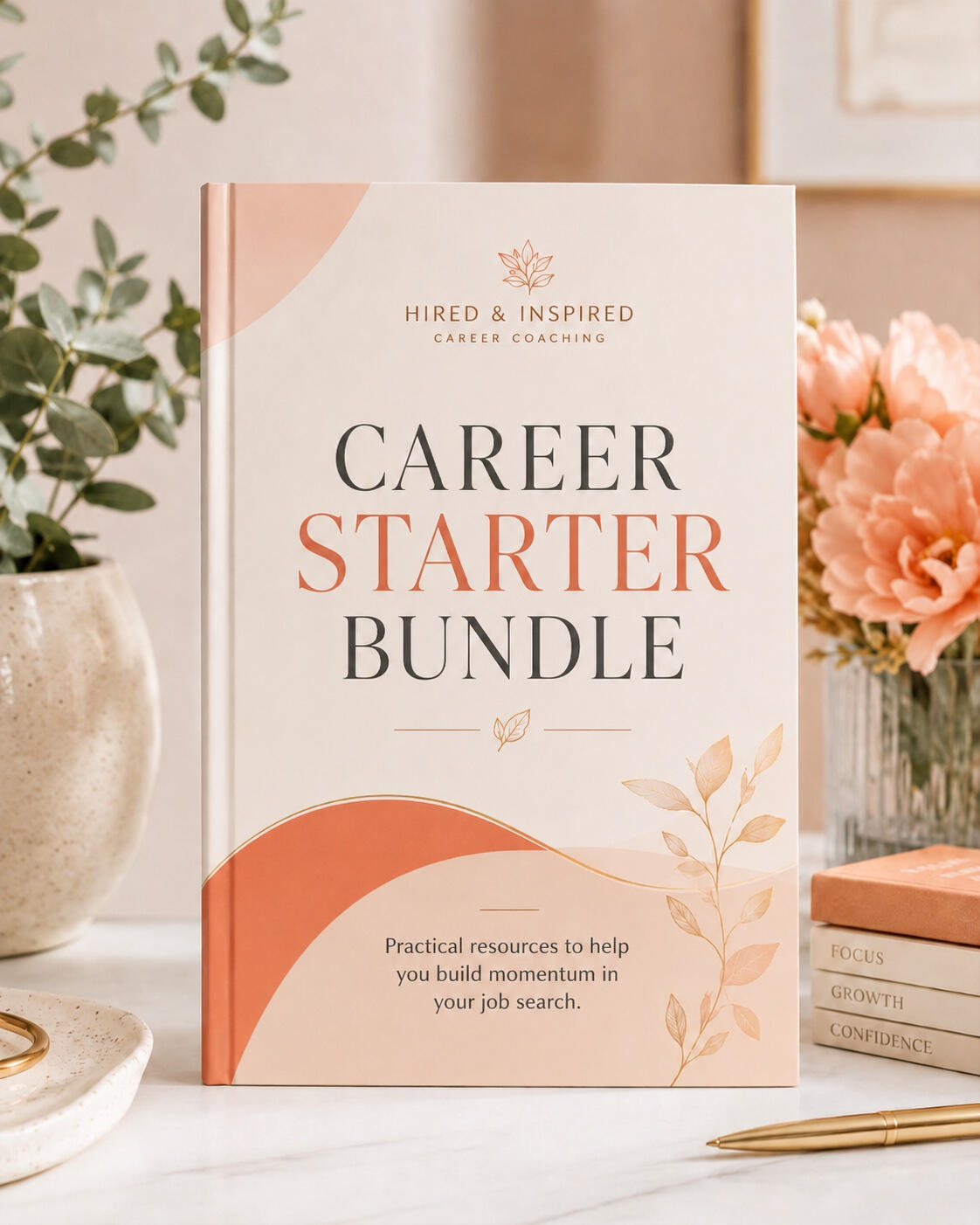
CAREER STARTER
BUNDLE
Everything you need to kickstart your career with confidence.
* Resume templates.
* Job search trackers.
* Email & Cover letter guides

LEADERSHIP ESSENTIAL BUNDLE
Level up your leadership with this comprehensive resource bundle.
* Workbooks & Templates.
* Growth Strategies.
* Action plans & more.

THE POWER OF ACCOUNTABILITY AND CAPABILITY IN LEADERSHIP
Strengthen your leadership by building accountability and capability.
* Practical strategies.
* Real-world examples.
* Reflection prompts.
Hired & Inspired
Clarity. Confidence. Your Next Chapter.
Free Career
Resource Library
Get five free career tools in one simple
download email.
Practical PDFs to help you review your resume, prepare
for interviews, organize your goals, and move forward
with more confidence.
What's Inside
Five practical resources. One powerful next step.
Resume-to-Interview
Checklist
Check whether your
resume is helping you
move closer to interview
invitations.
Get all five resources delivered to your inbox.
One email. Five free PDFs. No separate signups.
How it Works
Ready to get the free resource library?
Take the next step toward a clearer, more confident career path.
Hired & Inspired
Clarity. Confidence. Your Next Chapter.
Career Articles & Practical Advice
Practical guidance to help you strengthen your resume, prepare for interviews,
and navigate your next career move with more confidence.
Featured Articles
Handpicked reads to help you take the next best step.
Resume Tips
Why Your Resume Isn't Getting Read and What to Fix First
Simple, practical ways to make your
resume easier to scan, stronger to
review, and more likely to catch the
attention of hiring teams.
Interview Strategy
What to Say When You Don't Know the Answer in a Job Interview
Learn what to do when an interview
question catches you off guard and
how to respond without panicking
or rambling.
Career Reinvention
What to do After
a Job Rejection Letter
A practical guide to help you
process rejection, learn from
the experience, and keep your
job search moving.
Browse By Category
Find the article that matches where you are in your career journey.
Resume Tips
Practical advice to help you improve
your resume and showcase your
value clearly.
Interview Strategy
Helpful guidance to prepare
stronger answers, ease nerves,
and communicate with confidence.
Career Reinvention
Support for career changers,
returners, and professionals
ready for a new chapter.
Not sure if your resume is helping or holding you back?
Get your free resume score and see where your resume may need more clarity, focus, or stronger positioning.
Hired & Inspired
Clarity. Confidence. Your Next Chapter.
Choose the Career Support
That Fits Your Next Step
Practical, personalized career support, designed to help you create
clear, compelling materials and move forward with confidence.
Compare Our Main Services
Resume Quick Fix - $49
Best For
Jobseekers who want quick,
practical resume improvements
without purchasing a full package.
What's Included
* Light resume review
* Up to 3 bullet improvements
* Formatting/readability notes
* 5-10 keyword suggestions
* Short action list
Turnaround
2-3 business days
Career Alignment Audit - $149
Best For
Professionals who want to
know whether their resume
matches the roles they are targeting.
What's Included
* Resume review
* Targeting role alignment check
* ATS keyword gap review
* Strengths and positioning summary
* 2-3 sample bullet rewrites
* Action roadmap
* Recommended role direction
Turnaround
3-5 business days
Career Reset Package - $299
Best For
Professionals who feel stuck
and need deeper resume, positioning,
and job-search support.
What's Included
* Full resume review and strategy
* Career direction/role targeting review
* Resume rewrite or deep resume enhancement
* ATS keyword optimization
* Interview positioning guidance
* Job search strategy notes
* Final action plan
Turnaround
5-7 business days
Optional Add-Ons
Discounted add-ons may be available after or during purchase of a main service.
How It Works
You'll be notified once your materials are received and your service is in progress.
Not sure where to start?
Start with the free resume
score or choose the $49
Resume Quick Fix for fast,
practical feedback.
Practical, Actionable Advice
Quick resume feedback you can actually use.
Know what to fix before you apply again
Free Starting Point
Find out what may be helping your resume, and what may need improvement.
Hired & Inspired
Clarity. Confidence. Your Next Chapter.
Privacy PolicyLast Updated: May 29, 2026Hired & Inspired respects your privacy. This Privacy Policy explains what information we collect, how we use it, and how we protect it when you visit our website, download resources, purchase products, submit forms, or contact us.Who We AreHired & Inspired is a career services and resources website operated by Todd Talent Group LLC DBA Hired & Inspired.Website: www.hiredandinspired.com
Email: [email protected]Information We CollectWe may collect the following information when you interact with our website or services:Name and email address
Resume, career, or job search information you choose to submit
Responses to intake forms, questionnaires, or free resource forms
Payment-related information processed through third-party platforms
Messages or inquiries you send to us
Basic website usage or analytics informationHow We Use Your InformationWe use the information you provide to:Deliver free resources and digital downloads
Send email communications you requested
Respond to questions or inquiries
Provide resume, interview, and career support services
Process purchases and service requests
Improve our website, resources, and customer experience
Send occasional updates, offers, or career-related informationEmail CommunicationsIf you sign up for free resources or updates, you may receive emails from Hired & Inspired. You may unsubscribe at any time by clicking the unsubscribe link at the bottom of any marketing email.PaymentsPayments may be processed through third-party platforms such as Stripe, Gumroad, or similar payment providers. Hired & Inspired does not store your full credit card information. Payment platforms have their own privacy policies and terms.Resume and Intake Form SubmissionsIf you submit a resume, intake form, or career-related information, that information is used only to provide the service you requested, respond to your inquiry, or complete your order.Third-Party ToolsWe may use third-party tools to operate the website and services, including but not limited to Carrd, MailerLite, Stripe, Gumroad, Google Forms, Google Drive, and other business tools. These third-party services may collect and process information according to their own policies.Sharing Your InformationWe do not sell your personal information. We may share information only when needed to operate our website, deliver services, process payments, comply with the law, or protect our rights.Data SecurityWe take reasonable steps to protect the information you provide. However, no website, email system, or online service can guarantee complete security.Your ChoicesYou may unsubscribe from marketing emails at any time. You may also contact us to ask questions about your information or request updates where applicable.Digital Products and ServicesWhen you purchase a digital product or service, we may use your name, email, order information, and submitted materials to fulfill your purchase and provide customer support.Contact UsIf you have questions about this Privacy Policy, contact:Hired & Inspired
[email protected]
Hired & Inspired
Clarity. Confidence. Your Next Chapter.
Terms & ConditionsLast Updated: May 29, 2026These Terms & Conditions govern your use of the Hired & Inspired website, digital products, free resources, and paid services. By using this website or purchasing a product or service, you agree to these terms.Who We AreHired & Inspired is operated by Todd Talent Group LLC DBA Hired & Inspired.Website: www.hiredandinspired.com
Email: [email protected]Use of WebsiteYou agree to use this website and its resources for lawful personal or professional purposes only. You may not copy, resell, redistribute, or misuse any materials from this website.No Job GuaranteeHired & Inspired provides resume support, interview preparation, career resources, digital guides, and career-related recommendations. We do not guarantee interviews, job offers, promotions, salary increases, hiring outcomes, or employment results.Digital ProductsDigital products, including workbooks, guides, templates, and downloads, are for personal use only. You may not copy, share, resell, reproduce, or distribute them without written permission.Because digital products are delivered electronically, all digital product sales are generally final and non-refundable unless otherwise stated.Career ServicesPaid career services may include resume reviews, resume writing support, career alignment feedback, interview strategy, written recommendations, or related materials.You are responsible for providing accurate, complete, and timely information. Turnaround times begin after payment and after all required intake materials have been received.Resume and career recommendations are based on the information you provide. You are responsible for reviewing and approving any final materials before using them.RefundsDigital downloads are generally non-refundable after purchase.For paid services, refunds may not be available once work has begun, documents have been reviewed, or materials have been delivered. If you have an issue with your order, contact [email protected].Turnaround TimesEstimated turnaround times are listed with each service. Turnaround times may vary depending on workload, completeness of submitted materials, and communication delays.Add-OnsAdd-on services are designed to be purchased with or after a main service. If an add-on is purchased separately, we may contact you for clarification before beginning the work.Intellectual PropertyAll website content, digital products, guides, templates, worksheets, images, branding, and written materials are owned by Hired & Inspired or used with permission. You may not reproduce, distribute, or sell these materials without written consent.Third-Party Links and PlatformsThis website may link to third-party platforms such as Stripe, Gumroad, MailerLite, Google Forms, Google Drive, Carrd, and other tools. Hired & Inspired is not responsible for the content, policies, or practices of third-party websites or services.Email CommunicationsBy signing up for free resources or updates, you agree to receive emails from Hired & Inspired. You may unsubscribe from marketing emails at any time using the unsubscribe link included in the email.Limitation of LiabilityHired & Inspired is not responsible for employment decisions made by employers, hiring platforms, recruiters, or other third parties. Use of our products or services is at your own discretion.Changes to These TermsWe may update these Terms & Conditions from time to time. Updates will be posted on this page with a new “Last Updated” date.Contact UsIf you have questions about these Terms & Conditions, contact:Hired & Inspired
[email protected]
Hired & Inspired
Clarity. Confidence. Your Next Chapter.
12 Ways to Ensure That Your Resume Gets Read
The average corporate job opening attracts 250 resumes, according to the employment website Glassdoor. With that kind of volume, it’s little wonder that most resumes get looked at for 7 seconds or less.If you’re looking for a new position, how can you increase the odds that a hiring manager will pay attention to your application long enough to appreciate what you have to offer?Fortunately, there are many things you can do to make sure your resume gets read. Study these suggestions before you reply to another job listing.

Tips for Editing Your ResumeYou can make your resume stand out from the crowd. Review it carefully before you start your job search and update it at least twice a year or after any major achievement.Use these strategies:1. Use keywords. As you probably know, many companies use artificial intelligence to screen applicants. Clear the first hurdle by including keywords those robots are looking for. You can often figure that out by copying the language in the job advertisement.2. Strengthen your summary. Hiring managers are often pressed for time, so your summary may determine whether your resume lands in the reject pile or receives further consideration. Write a brief and compelling description of your background and what makes you an outstanding candidate.3. Quantify your accomplishments. Numbers sound persuasive. Create bullet points that communicate your achievements with percentages and other statistics.4. Simplify formatting. A little structure can make your resume easier to scan but avoid going overboard. Stick to a professional font, adequate white space, and helpful headings.5. Ask for feedback. You may be so familiar with your resume that you overlook obvious typos. Ask a friend or family member to look it over and tell you what they think. Read it out loud to see how well it flows.6. Deliver it directly. Now that you’ve polished your resume, guide it to someone who wants to see it. Use LinkedIn and other sources to find the name and position of an appropriate contact, if it’s not given in the job listing.

Other Tips for Making Sure Your Resume Gets ReadKeep in mind that your resume is just one ingredient in a successful job search. You need to maximize the rest of your strategy too.Try these techniques:1. Assess your qualifications. Are you seeking positions that match your background and make sense in the context of your career path? You probably need to provide some explanation if you’re overqualified, under-qualified, or trying to change fields.2. Customize your cover letter. This is where you can address such concerns and make the case for hiring you. Research the company, so you can discuss their specific needs and how you can help.3. Add work samples. Give employers a preview of the impressive qualifications that won’t fit in your resume. Link your application to your personal website or your LinkedIn profile.4. Obey instructions. Make a positive first impression by reading the application guidelines and following them. Show them that you’re considerate and easy to work with.5. Follow up. Unless the ad says no calls, try to discuss the position further. Be prepared with substantive questions if someone has the time to speak with you. Be gracious and express your enthusiasm if they ask you to wait while they complete their process.6. Leverage your network. One of the most effective ways to get an employer’s attention is to find a contact you have in common. Maybe you know someone willing to make a call or send a recommendation.Even if you're a star performer, you may have to work on your resume to be sure it gets read. Making it easier for employers to recognize your value will help you to land more interviews and job offers.
Hired & Inspired
Clarity. Confidence. Your Next Chapter.
Read This Before You Exaggerate on Your Resume
There’s a lot of pressure to embellish your resume but lying about your qualifications could be disastrous. You may be confused about where to draw the line, especially if you’re new to the job market or returning after some time off.If so, you have plenty of company. About 46% of adults know someone who has included false information on a resume, according to a survey by the staffing firm OfficeTeam.It’s a disturbing situation because the risks and consequences of getting caught are so high. Hiring managers may notice inconsistencies between your online profile and your application or your new boss may have a conversation with one of your former coworkers. As a result, you could lose a job offer or even be fired.You can avoid exaggerating on your resume and still present yourself as an outstanding candidate.Try these alternative strategies for making your experience and education sound as impressive as possible without stretching the truth.

Being Honest About Your Experience:1. Seek professional help. If you’re having trouble attracting job offers or feel like you need to market yourself more effectively, consider working with a job coach or a resume service. Someone with expertise in human resources can help you deal with weaknesses and showcase your strengths.2. List correct dates. Gaps in employment history are common these days. Explain how you used your downtime productively with contract work or volunteering.3. State your job title. What if you operated at a higher level than your job title suggests, or few employers would understand what it even means? Put the official label on your resume, but back it up with additional details about what you actually did.4. Describe your role. You’ve probably been advised to focus on your impact and quantify your achievements. Use your judgement and ask others for feedback if you think you may be getting too creative. Persuading one customer to order a $20 entree instead of a $10 dish is different from doubling sales.5. Assess your skills. Is there a long list of software programs and foreign languages at the bottom of your resume? Be sure to describe your level of proficiency and fluency accurately. You may be tested during the hiring process or on the job.6. Consider your hobbies. Unless your pastimes are relevant to the position, you can usually leave them off. If you do mention them, pick activities you really participate in.7. Do volunteer work. Supporting worthy causes is a great way to make your resume stand out. If you’ve been neglecting your charitable side, it’s easy to catch up. Call a volunteer hotline or ask your neighbors about local nonprofits they like.8. Disclose your salary. You can get a raise without inflating your last salary. Many employers rely more on market value and their own budget in determining compensation. Practicing your negotiation skills will help too.

Being Honest About Your Education:1. Forget about grades. Outside of academia, few employers will want to hear about your GPA. On the other hand, you might want to brag about graduating summa cum laude if the facts bear it out.2. Declare your major. Cheer up even if the job ad specifies a different major than yours. Most companies are flexible about such matters.3. Complete your degree. Claiming fictitious degrees can be hazardous to your career. If you need additional credentials to advance, consider going back to school or taking additional courses at a local university or online.Honesty is the safer policy when it comes to applying for a job. Design a resume that will help you sell yourself and double check the contents to ensure you’re painting an accurate picture of your background and potential.
Hired & Inspired
Clarity. Confidence. Your Next Chapter.
Reduce Stress Before a Job Interview With These Techniques
Interviews are pretty stressful experiences. Even if you’re excited by the prospect of potentially getting a new job, the chances are you’re feeling nervous about being “under the microscope” with your interviewer.Afterall, the person you’re speaking to in this interview is there to judge you. They need to determine if you’re the right person for the role, and that’s enough to crank up anyone’s nerves.If it helps, you’re not the only person to feel stressed before an interview. One study found that around 92% of US adults feel anxious about job interviews. It’s natural.Fortunately, there are ways you can reduce your feelings of stress and improve your chances of standing out as a confident future employee.Here are our top tips.

1. Start with a Mental Dress RehearsalMost career experts recommend practicing a few interview questions with your friends and family members, but you can even go beyond this to prepare a little more.Research demonstrates that experiencing success increases our feelings of confidence, even if we’re just imagining an interview going well.With that in mind, close your eyes and walk through what it might look like if you were to go through the interview successfully, answering questions perfectly every time. Imagine yourself looking calm, prepared, and confidently responding to any queries.If you get any sparks of creativity about how you can improve your interview experience, make a note to come back to them later.2. Create the Perfect PlaylistMusic has a unique ability to influence the way we feel. You’ve probably noticed this if you’ve ever used a playlist to get your energy levels up for the gym. When you’re preparing for a big interview, your musical strategy should be all about motivation.Choose songs that make you feel good, and play them in the morning before you head out for your interview.It might also be worth setting up a similarly positive playlist for after the interview, so you can wind down again.3. Give Yourself a Pep TalkSelf-affirmation is a surprisingly powerful tool!Most people don’t realize it, but we tend to spend a lot of time putting ourselves down and not as much time building ourselves up.Chances are, if you’re panicking about your upcoming interview, you’re thinking about the experiences that didn’t go so well for you in the past, or you’re telling yourself how hard it’s going to be to compete against other candidates.What would happen if you flipped the script and reminded yourself how great you are instead? Let yourself know that you deserve this role just as much as anyone else.Focus on re-affirming your skills and talents and reminding yourself of what makes you good for this job. You’ll feel better, and you’ll come up with some great ideas on how to respond to questions your interviewer might ask about your suitability for the role too.

4. Prepare for the WorstThis might seem like a bit of a negative strategy when you’re trying to focus on positivity, but it can be reassuring to prepare for the worst. The reality is the worst thing that can likely happen at the end of your interview is that you don’t get the job.So, ask yourself what you’re going to do if that happens. The answer is probably just “look for something else and try again.”You can also go through some other fears that are worrying you about the interview and come up with ways to prepare for them. For instance, if you’re worried about not having an answer to a question, learn how to cover your tracks when this happens. You could even have an interview cheat-sheet ready in your pocket, just in case.5. Plan for What’s NextPlan something nice for the hours after your interview, so you have something to look forward to when you’re sweating through some tough questions.You can even plan for some productive things to do when the interview is over, like applying for other roles just in case, or talking through the interview process with your friends to make yourself feel better about any hiccups that might have happened.Looking forward to what comes after the interview will stop you from feeling too frozen in fear by the event itself to focus properly.Once you’ve done your regular preparations for the interview, you can reduce your jitters and feel calm and confident beforehand by using these techniques. This will enable you to focus on putting your best foot forward during the interview itself.
Hired & Inspired
Clarity. Confidence. Your Next Chapter.
10 Big Career Mistakes
Your mom told you it’s okay to make mistakes, but that’s not always true. Sometimes success is more dependent on making fewer mistakes, rather than doing something spectacular. Mistakes can matter, and they can matter a lot.Did you know that the 200th best tennis player wins about 49% of the points he plays? What percentage of points does the number one player in the world win? 53% The difference between barely scraping by and being the best in the world is making 4% fewer mistakes, at least in tennis.Career mistakes can be just as costly. There’s a big difference between losing a job and being promoted.

For your best career experience, ensure that you avoid making these career mistakes:1. Failing to make your boss look good. Whether you like your boss or not, they potentially have a lot of control over your future. Making your boss look good is positive for your future. Making him look bad doesn’t improve your future prospects.**Consider how your words, actions, and decisions impact your boss.2. Failing to network. It’s important to get to know the people in your company and your industry. Many jobs are never posted. They’re simply offered to people. You could be missing out on some great opportunities by keeping to yourself instead of networking.**If you ever need a new job, your network can be invaluable.3. Poor wardrobe decisions. Dress for your position or the position one level above yours. Dressing like your boss is generally a good idea. If you’re underdressed, people will assume that you’re not serious.4. Failing to improve. Since you’re going to the same place each day and doing the same things over and over, it only makes sense that you’d improve over time.**Do your best to become an expert at your job. Learn everything you can and do the best job you can.5. Ignoring warning signs. Is your industry being replaced by new technology? Is it clear that your boss has it out for you? Few people are fired by complete surprise. There are usually warning signs. Get out while the getting is good.

6. Being unreliable. To avoid this mistake, just be reliable. Turn your assignments in on time and do what you say you’re going to do.
7. Gossiping. As a general rule, it’s not smart to talk about others. Negative comments often come back to haunt you at a later time. Plus, much of what you hear around the water cooler is false anyway.
8. Arriving late and leaving early. Be on time. This goes back to being reliable. Ensure that you put in the required number of hours each day. You don’t want to be known as the person that isn’t pulling their own weight.
9. Staying at a job you dislike. If you dislike your job, have enough respect for yourself to look for another one. It’s hard to do something you don’t like well. It’s also hard to hide the fact that you don’t like your job. Do yourself a favor and find a company and position that you enjoy.
10. Chasing money. We all work to earn money, but money isn’t the only consideration. Do you like the company, the industry, your boss, and your coworkers? How is the city? How are the benefits? There’s more to a job than just making money.Before you try to reinvent the wheel at work, focus on being the employee that makes the fewest career mistakes. Avoiding these 10 errors will greatly aid your career and your earning power over the years.In many instances, avoiding mistakes can be more powerful than doing something incredible!
Hired & Inspired
Clarity. Confidence. Your Next Chapter.
Mastering Interview Question You Can’t Answer
Job interviews can be stressful, especially when faced with questions you don’t know how to answer. It’s crucial to remain calm and composed, using strategies to navigate these challenging moments effectively.Being caught off guard by an interview question is a common experience. However, how you handle these moments can set you apart as a composed and thoughtful candidate. This guide provides strategies for managing such situations and turning potential stumbling blocks into opportunities to demonstrate your problem-solving skills and adaptability.

Strategies for Handling Tough Interview Questions1. Stay Calm and Composed
Tip: Take a deep breath before responding. Maintaining your composure shows that you can handle pressure effectively.
Example: If asked a technical question you’re unsure about, calmly say, “That’s a great question. Let me think about it for a moment.”2. Clarify the Question
Tip: Ask for clarification if you don’t understand the question. This shows you’re engaged and seeking to provide a thoughtful answer.
Example: “Could you please elaborate on what you mean by…?”3. Take a Moment to Think
Tip: It’s perfectly acceptable to take a brief pause to gather your thoughts. This demonstrates that you’re considerate and not just providing a rushed answer.
Example: “That’s an interesting question. Let me take a moment to consider it.”4. Use the STAR Method for Behavioral Questions
Tip: For behavioral questions, structure your answer using the STAR method (Situation, Task, Action, Result). This can help you organize your thoughts and provide a clear, concise response.
Example: “When faced with a similar situation at my previous job, the challenge was to… (Situation), my task was to… (Task), I took the following actions… (Action), and the result was… (Result).”

5. Be Honest and Show Willingness to Learn
Tip: If you genuinely don’t know the answer, it’s better to be honest than to make something up. Highlight your willingness to learn and adapt.
Example: “I’m not familiar with that specific concept, but I’m very eager to learn more about it and can quickly get up to speed.”6. Relate to a Similar Experience
Tip: If you don’t have a direct answer, relate the question to a similar experience you’ve had. This shows your ability to draw on your knowledge and experiences.
Example: “While I haven’t encountered that exact situation, in a similar scenario, I…”7. Focus on Problem-Solving Skills
Tip: Emphasize your problem-solving skills and how you approach challenges, even if you don’t have the specific answer.
Example: “In situations where I don’t immediately know the answer, I typically… (research, consult with colleagues, etc.), which has always helped me find a solution.”8. Offer to Follow Up
Tip: If appropriate, offer to follow up with a more detailed answer after the interview. This demonstrates your commitment and thoroughness.
Example: “I would need to do a bit more research to provide a comprehensive answer. Can I follow up with you on this after the interview?”Conclusion
Handling tough interview questions effectively can demonstrate your ability to stay calm under pressure, think critically, and remain adaptable. By using these strategies, you can turn potentially difficult moments into opportunities to showcase your strengths and problem-solving abilities.
Hired & Inspired
Clarity. Confidence. Your Next Chapter.
Effectively Responding to Interview Questions on Stress Management
Whether you want to be an air traffic controller or a gardener, you’ll probably run into interview questions about how you handle stress. It’s an important issue for just about any workplace.Almost 60% of U.S. workers report feeling stressed on a daily basis, according to Gallup’s latest State of the Global Workplace survey. An alarming 14% say it’s gotten so bad they want to hit their coworkers.Naturally, employers are concerned about this situation. Hiring managers may ask you about how you juggle demanding workloads and unhappy customers. They may even try to find out what’s going on in your personal life and how that could affect your behavior.

You’ll probably make a more favorable impression if you think about your answers in advance. Try these tips for talking about stress during a job interview.Tips for Your Interview1. Tell stories. For any interview questions, you can make your responses more memorable and effective by giving specific examples. Develop a collection of stories so you can pick something relevant to each situation.2. Be positive. Steer clear of any details that might prevent you from being hired. Talk about how you use stress to your advantage by letting it motivate you and open up opportunities for change.3. Focus on productivity. Remember that your employer is mostly interested in how stress might affect your ability to do your job. Finish your story by describing what you accomplished while under pressure.4. Gather information. As long as you’re already talking about stress, this can be a chance to find out more about what your future work conditions would be like. Ask the hiring manager what they think the major challenges are for their company and the position you’re considering.5. Share support. You may score bonus points if you show an interest in helping your coworkers deal with stress too. Listen to what they have to say about their company’s wellness programs. Maybe you can make some suggestions based on your own experience.Look calm. It’s ironic to be discussing stress while an interview is increasing your anxiety levels. Ensure that your body language matches your words. Relax your muscles and resist the urge to fidget.

Tips for Your Work Life:1. Take breaks. To be successful, it’s important to pay attention to what you do each day, as well as what you say during an interview. Start by pausing at least once each hour to keep stress from building up. Stretch your muscles or take deep breaths.2. Use vacation days. Research shows that going on at least one vacation a year helps protect your mental and physical health. Use your time off to reconnect with your loved ones and explore new places.3. Avoid excess overtime. Productivity declines dramatically if you frequently work more than 50 hours a week. Prioritize your tasks and limit distractions. Start your day with your quitting time in mind.4. Limit multitasking. Try to focus on one activity at a time. Otherwise, you risk damaging your brain. Head scans show that switching between tasks for a prolonged period can lower your brain density, in addition to causing fatigue.5. Set realistic expectations. Are you trying to do too much? Calculate how long your main responsibilities take and budget enough time to complete them without rushing.6. Stay active. Regular exercise is one of the most constructive ways to relax. Make it part of an overall healthy lifestyle that will keep you strong and resilient.It’s helpful for you and your future employer to recognize the impact of job-related stress. Your interview could be a starting point for maintaining a healthy and supportive work environment.
Hired & Inspired
Clarity. Confidence. Your Next Chapter.
Steps to Take After Receiving a Job Rejection Letter
Being rejected for a job stings, especially when you made it to the final round of interviews and thought you were a strong candidate. Just when you were looking forward to a job offer and picturing how your office would look, you receive an email or a letter telling you that the company hired someone else.While your first reaction may be to lash out at the company or blame yourself, it’s important to learn from the experience and move on.Consider these tips for following up on a job rejection letter and sticking with your job search until you achieve success.

Tips for Following Up on a Job Rejection Letter:1. Consider responding. If you’re still interested in the company, it may be worth responding to their letter. Be sure to sound positive and ask them to keep you in mind for future opportunities.2. Connect on LinkedIn. You could also ask the contacts you made while interviewing to connect with you on LinkedIn. Remind them of your interview and thank them for their time and consideration.3. Check future openings. You’ve probably read letters saying that your resume will be kept on file. The truth is that it will probably be forgotten as time goes by. It’s up to you to watch the company website and other places where you can find the latest vacancies to apply for.4. Ask for feedback. Companies may not want to comment on their hiring process, but there are some cases where you can collect valuable feedback. If you worked with a recruiter, ask them if they can tell you how the decision was made and what areas you may need to strengthen.5. Evaluate your performance. Of course, a rejection can also be a chance to critique yourself. Examine the entire process from your resume to the final interview. Are there things you want to do differently next time?

Tips for Continuing Your Job Search:1. Accept your feelings. It’s natural to feel hurt or irritated when you’ve been turned down for a position you wanted. Treat yourself with compassion and acknowledge your loss.
2. Talk it over. It may help to discuss the situation with a friend or a professional job coach. Focus on what you can do to make your next interview more effective.
3. Clarify your goals. Maybe you’re on the appropriate track or perhaps you would benefit from changing your approach. Think about what kinds of jobs you enjoy and what you’re good at. Expanding your options could uncover new possibilities or at least give you more practice interviewing.
4. Build support. Join a job hunting club or start one of your own. Let your family and friends know how they can help you.
5. Review your accomplishments. Boost your self-esteem by making a list of your past achievements. Carry it with you so you can remind yourself of the talents you can contribute.
6. Assess your finances. Maybe you’re concerned that your job search is lasting longer than expected, and your budget is growing tighter. Ease the pressure by exploring possible sources of side income and reducing unnecessary expenses.
7. Stay positive. Remaining cheerful will make you more resilient in handling rejection. Remember that you have the potential to be a valuable employee and a contributing team member.Maintaining confidence and hope will help you to bounce back from rejections and use each experience to fine tune your job search strategies. If you network vigorously and consistently follow up on each lead, you can find more opportunities and increase your chances of finding a job you’ll love.
Hired & Inspired
Clarity. Confidence. Your Next Chapter.
8 Tips to Boost Confidence at Work
Confident people tend to be more successful at work, are happier, and are not afraid to go for a promotion or face new challenges.Would it not be helpful if you were able to boost your confidence in your skills and workplace abilities?

Try these tips to increase your confidence at work:1. Cut out negative self-talk. A positive mentality will help you learn more easily and ultimately help boost your confidence. When you find yourself speaking negatively or criticizing yourself, immediately switch it to something positive, instead.For example, instead of criticizing your lack of knowledge about something, tell yourself: It’s great that I can learn what I need quickly and easily so that tasks like these become a cinch to do!Instead of saying, “I can’t,” ask yourself, “How can I?” This takes your focus off of the negative and puts it in the realm of the positive. In this mode, you may come up with the solution you need to enable you to do the thing that you thought you couldn’t.2. Increase your knowledge. When you take the time to learn a new skill or piece of knowledge, you can be certain that what you’re doing is correct.
You may want to look at online courses, or perhaps attend a seminar, designed to enhance your skills.
Watch what others in your workplace do successfully and try to copy them.3. Practice makes perfect. When you practice at a certain task, you will get better at it in time as you are able to correct any mistakes that you make.
Each time you complete a task, ask yourself whether there is anything you could do differently to improve the process the next time you do it.4. Work on your strengths. A proven way to boost confidence in the workplace is by focusing your attention on excelling at the skills you are already good at.Doing something excellently, rather than just adequately, can do wonders for your confidence!

5. Ask questions. Don’t be afraid to ask questions if there is something you don’t know or understand. After all, the knowledge you seek could be the information you need to finish your task quickly and accurately.6. Focus on your past successes. An easy way to boost your confidence is to think about past projects that you’ve completed successfully. Did you complete a task within the deadline? Perhaps received praise from your boss?Focus on the positives rather than the negatives.7. Act confidently. If you’re approaching a new task, or perhaps an entirely new job, then chances are you won’t know exactly what needs to be done. In these situations, it’s completely normal to feel under-confident. However, if you act confidently and put on a positive frame of mind, you may surprise yourself.Not only will you gain the trust of your work colleagues, but your own self-confidence will increase too, with the knowledge that you are capable at your job with valuable skills to offer.8. Have fun. Taking yourself too seriously in the workplace will leave your self-esteem in tatters when you encounter setbacks. Of course, you want to be good at your job, but this does not mean that you need to be serious 100% of the time.You are allowed to have fun and doing so will allow you to laugh at yourself and any mistakes you make.Take any criticism directed at you with good humor and you won't suffer any knocks to your confidence.A little extra confidence can go a long way toward helping you reach your career goals. Think of these tips the next time you’re feeling doubtful about your skills or abilities and you’ll be able to bring your confidence back up again in short order.
Hired & Inspired
Clarity. Confidence. Your Next Chapter.
Quick Tips for Successful Career Development
Your manager, boss or supervisor isn’t responsible for your career. While these people can give you access to more opportunities, or help you grow – it’s up to you to decide what you’re going to do to ensure your success. This means dedicating some time to effective career development.If you’re keen to make more of an impact in your chosen career, it’s important to start with some planning. Ask yourself regularly what you want to accomplish in your professional life and take steps to figure out how you’re going to reach those targets.

Here are some quick tips to really help you enhance your career development.Set Small Goals OftenWhen it comes to annual reviews, there’s a lot of focus on setting massive targets for yourself to accomplish sometime in the distant future. While it’s nice to have a good vision of what you want to accomplish eventually, focusing exclusively on long-term goals can make it difficult to maintain motivation.When you’re only making little steps, you’re not as inspired to push forward.Setting smaller, more achievable goals will help to keep you on track. For instance, rather than setting the goal of becoming the manager of your team and waiting to achieve that, start by setting the goal of developing more leadership skills or volunteering for more opportunities.These goals will help you to reach your long-term target without being overwhelming.Stretch YourselfAlthough it’s important to choose tangible and realistic targets for your career, this doesn’t mean you shouldn’t be challenging yourself too. Ultimately, if you want to be satisfied with your accomplishments, you’ll want to start by setting goals that really push you to test your limits.Look for ways to step out of your comfort zone – even if it’s only a little. Do something that scares you slightly, but that you can still handle.For instance, if you don’t like public speaking, you could make a plan to speak to a small local forum to test your presentation skills. This will give you some anxiety, but it’s much easier than planning to host a presentation at an event with thousands of people.

Learn, Celebrate, and GrowAs you push yourself to achieve your small, short-term goals, pay attention to everything you accomplish. Celebrate those little wins, no matter how small they might seem. Pay attention to whether you’re patting yourself on the back as often as you should be.While celebrating yourself is crucial, it’s also important to examine areas where you’ve been unhappy with your performance tool.Rather than beating yourself up for not being good enough, ask yourself what you’re not happy with and why. If you can get feedback from leaders and other members of your team, this could be useful too.Every time you’re unhappy with an outcome in your professional career, it’s an opportunity to build on your skills and accomplish something new.Look for Opportunities to Develop KnowledgeKnowledge is power in the business landscape. If you want to successfully develop your career, it’s important to commit to developing your knowledge.Gaining education through experience, whether it’s with positive feedback or advice about something you did poorly, is a good start. However, remember to look for other ways to learn too.There are countless courses and skill development tools online for people from virtually every industry. If you can’t find a course linked to your specific sector, you can even consider looking into certifications that are transferable across all industries, like better communication or leadership skills.Read up on blogs and articles from thought leaders in your industry and follow podcasts which could give you valuable industry about your landscape.Network EffectivelyNetworking is another important part of building a successful career. Although it can be nerve wracking to connect with others in your industry – particularly if you’re an introverted person -- it’s crucial.In many careers, it really is who you know that matters most.Fortunately, there are plenty of ways to network in today’s digital landscape. You can join groups on social media forums and dedicated industry websites. There are also digital events you might look into attending, and online expos.If you can meet people in real-life, do try to make some time to do so. The connections you make in person are often the most meaningful. You could even look into getting a mentor to help you network with a wider range of industry professionals.Time to Build Your Future?It’s up to you to take control of your career and pursue the kind of accomplishments that matter most to you. Don’t make the mistake of thinking you can sit back and wait for opportunities to fall into your hands. Follow the tips above.
Hired & Inspired
Clarity. Confidence. Your Next Chapter.
Get Your Free Resume Score
Not getting responses from your resume? Upload it for a quick Free Resume Score from Hired & Inspired Resume Services. You’ll receive feedback on what’s working, what may be hurting your results, and one recommended next step.